


Now Reading: How Do Baristas Make the Perfect Frothy Cappuccino?
-
01
How Do Baristas Make the Perfect Frothy Cappuccino?
How Do Baristas Make the Perfect Frothy Cappuccino?


I often hear people ask how baristas make the perfect frothy cappuccino every single time. I asked the same question for years. I loved cappuccino, but my home attempts never matched the café experience. The foam felt weak. The texture felt flat. The flavor felt unbalanced.
Over time, I studied barista methods. I practiced their steps. I tested milk types. I adjusted espresso ratios. I learned that baristas do not rely on luck. They follow clear rules. They respect timing. They control temperature. They understand milk behavior.
In this article, I explain how baristas create the perfect frothy cappuccino and how the process works from start to finish.
What Makes a Cappuccino Different From Other Coffee Drinks
A cappuccino follows a strict structure. It uses equal parts espresso, steamed milk, and milk foam. Baristas respect this balance.
A latte uses more milk.
A flat white uses less foam.
A cappuccino relies on thick, dry, stable foam.
The foam defines the drink. Without proper foam, the drink fails.
The perfect frothy cappuccino has:
- A strong espresso base
- Warm milk with light sweetness
- Thick foam that holds shape
- A dry, airy top layer
Baristas focus on foam first. Foam controls texture. Texture controls mouthfeel.
Why Espresso Quality Matters First

Baristas start with espresso. Espresso builds the foundation of the drink.
They use:
- Fresh coffee beans
- Fine grind size
- Correct pressure
- Proper extraction time
A weak espresso cannot support foam. A bitter espresso ruins balance. Baristas aim for a smooth, bold shot with light crema.
Crema matters. Crema helps milk foam blend smoothly. Crema also adds aroma.
For the perfect frothy cappuccino, espresso must taste clean and strong before milk touches it.
Why Milk Choice Affects Foam Quality
Baristas choose milk carefully. Milk controls foam structure.
Whole milk creates the best foam.
It contains more fat.
Fat creates stability.
Low-fat milk creates more bubbles but weaker structure. Plant milk needs special handling.
Baristas prefer cold milk. Cold milk stretches better. Cold milk gives more control.
Milk freshness matters. Old milk fails to foam well.
For the perfect frothy cappuccino, milk must be:
- Cold
- Fresh
- Properly stored
How Baristas Steam Milk Correctly
Milk steaming separates amateurs from professionals.
Baristas follow two stages:
- Stretching
- Texturing
Stage One: Stretching the Milk

Baristas place the steam wand just below the milk surface. They introduce air slowly. They listen for a soft hissing sound.
This step creates foam.
Too much air creates dry bubbles.
Too little air creates flat milk.
Baristas stop stretching when milk reaches body temperature.
Stage Two: Texturing the Milk
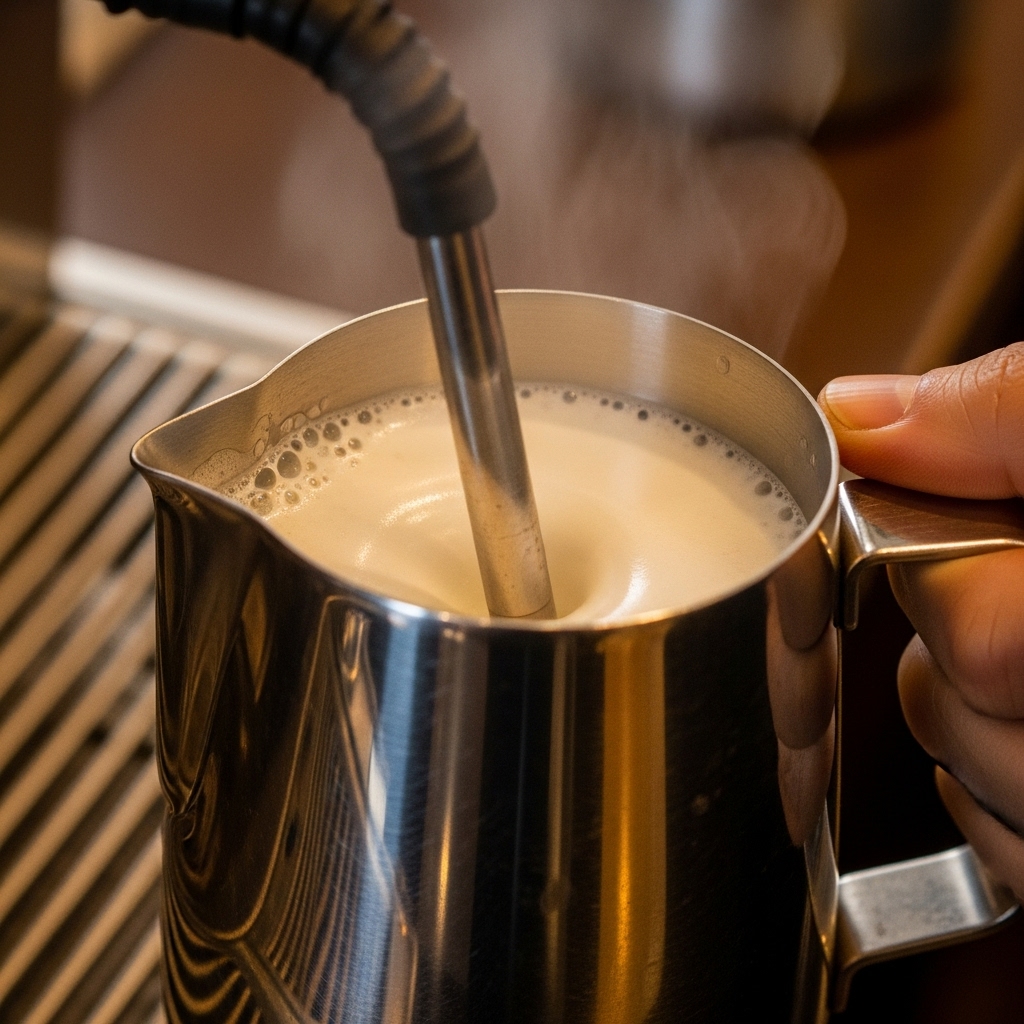
Baristas lower the steam wand deeper. They create a rolling motion. This breaks large bubbles into microfoam.
Microfoam feels smooth.
Microfoam looks glossy.
Microfoam holds shape.
This texture defines the perfect frothy cappuccino.
Milk Temperature Controls Foam Success
Temperature matters more than people realize.
Baristas heat milk between 60°C and 65°C.
Hotter milk destroys foam.
Cooler milk feels flat.
Milk proteins break down at high heat. Once broken, foam collapses.
Baristas stop steaming before milk becomes too hot to touch.
Correct temperature keeps foam thick and stable.
Why Foam Texture Matters More Than Volume
Some people think cappuccino needs a tall foam cap. That idea is wrong.
Baristas care about texture, not height.
Good foam feels:
- Light
- Dry
- Fine
Bad foam feels:
- Wet
- Heavy
- Large-bubbled
The perfect frothy cappuccino uses foam that sits gently on the drink. It does not sink. It does not slide.
Texture creates a creamy mouthfeel without excess milk.
How Baristas Pour Cappuccino Milk
Pouring controls final structure.
Baristas pour slowly.
They tilt the cup slightly.
They allow milk to mix with espresso first.
Foam enters last.
Foam stays on top.
They stop pouring once foam reaches the rim.
This method keeps layers clean and balanced.
A rushed pour destroys structure. A controlled pour preserves the foam crown.
Why Cup Size Matters
Baristas use small cups for cappuccino.
A standard cappuccino cup holds 150 to 180 ml.
Large cups ruin balance.
Small cups maintain ratio.
The perfect frothy cappuccino needs equal parts. Cup size controls that rule.
How Baristas Control Foam Thickness
Baristas adjust foam thickness through:
- Air intake time
- Milk choice
- Wand position
More air creates thicker foam.
Less air creates smoother foam.
For cappuccino, baristas aim for thicker foam than latte foam.
They stop stretching earlier than latte milk but later than flat white milk.
This timing creates the correct foam density.
Why Clean Equipment Matters
Dirty steam wands ruin foam.
Baristas clean the steam wand before and after each use. Milk residue blocks airflow. Blocked airflow creates poor foam.
Clean pitchers matter.
Dry pitchers matter.
Cold pitchers matter.
The perfect frothy cappuccino needs clean tools every time.
How Timing Affects Cappuccino Quality
Baristas work fast but controlled.
Milk foam collapses with time. Espresso crema fades with time.
They steam milk right after pulling espresso.
They pour immediately.
Delay destroys balance.
The perfect frothy cappuccino exists only when timing stays tight.
Why Baristas Avoid Overworking Milk
Milk foam hates overhandling.
Shaking destroys structure.
Stirring breaks bubbles.
Tapping too hard collapses foam.
Baristas tap lightly.
They swirl gently.
This keeps microfoam intact.
The Role of Practice in Foam Mastery
Baristas train daily. Foam control takes muscle memory.
They watch milk movement.
They listen to steam sound.
They feel temperature with their hand.
Machines help, but skill matters more.
Anyone can learn this with repetition.
Common Home Mistakes That Ruin Cappuccino Foam
I made these mistakes myself before learning barista rules.
- I used hot milk instead of cold
- I overheated milk
- I added too much air
- I rushed the pour
- I used large cups
Each mistake damaged foam.
Once I corrected them, my cappuccino improved fast.
How You Can Apply Barista Techniques at Home
Download the infographic below for future use

You do not need a café setup to improve results.
You can:
- Use whole milk
- Start with cold milk
- Stop steaming early
- Pour slowly
- Use smaller cups
Focus on foam texture, not height.
These steps bring you closer to the perfect frothy cappuccino.
Why Foam Creates the Cappuccino Experience
Foam changes everything.
Foam controls aroma.
Foam controls mouthfeel.
Foam balances bitterness.
Without foam, cappuccino feels flat.
With proper foam, each sip feels smooth and warm.
This is why baristas treat foam with respect.
Final Thoughts on the Perfect Frothy Cappuccino
The perfect frothy cappuccino does not happen by accident. Baristas follow simple rules with discipline. They respect milk science. They control heat. They focus on texture.
Once I understood these steps, cappuccino stopped feeling mysterious. It became repeatable.
If you focus on:
- Espresso strength
- Milk freshness
- Controlled air
- Proper temperature
- Gentle pouring
You can create café-level cappuccino at home.
Foam is not decoration. Foam is structure. Foam is balance. Foam is the heart of the perfect frothy cappuccino.
People also ask
1. What is the difference between a cappuccino and a latte?
A cappuccino has equal parts espresso, steamed milk, and milk foam. A latte has more steamed milk and less foam. The cappuccino’s foam is thicker and drier, which gives it a rich texture.
2. Why does my cappuccino foam collapse quickly?
Foam collapses when milk is overheated, over-aerated, or old. Using cold, fresh milk and steaming it correctly helps maintain stable foam. Pouring immediately after steaming also keeps it intact.
3. Can I make a frothy cappuccino at home without a machine?
Yes. You can use a French press or a handheld milk frother. Heat milk gently, then froth it until smooth microfoam forms. Pour it over a strong shot of espresso.
4. Why does my cappuccino taste flat or bitter?
Flat or bitter taste usually comes from weak or over-extracted espresso. Freshly ground beans, proper espresso pressure, and correct brewing time create a balanced flavor that complements the foam.
5. How do baristas get the perfect foam texture?
Baristas control air intake and milk temperature carefully. They stretch milk with the steam wand to add air, then texture it by rolling the milk to create microfoam. Foam should be light, dry, and creamy, not bubbly or wet.
Related Posts



Stay Informed With the Latest & Most Important News
Previous Post
Next Post







Advertisement


Advertisement

-
 0112 Viral TikTok Desserts You Must Try at Home
 -
 027 Coffee Recipes Every Coffee Lover Needs to Try in 2025
 -
 037 Easy Homemade Coffee Drinks That Taste Better Than Starbucks
 -
 04Which Dessert Freezes the Best for Busy Weeks?
 -
 05What’s the Secret to Making the Creamiest Cheesecake Ever?
 -
 06No-Bake Desserts You Can Make in 10 Minutes or Less
 -
 07What Dessert Should You Bring to a Potluck? (Easy Answers!)