



The Origins of Coffee
Coffee’s rich history dates back to the 9th century, where legend states that an Ethiopian goat herder named Kaldi discovered its energizing properties. After noticing his goats becoming energetic from eating coffee cherries, he tried the fruit himself. News of the energizing beans spread, leading to coffee’s journey to the Arabian Peninsula.
Cultivation and Harvesting
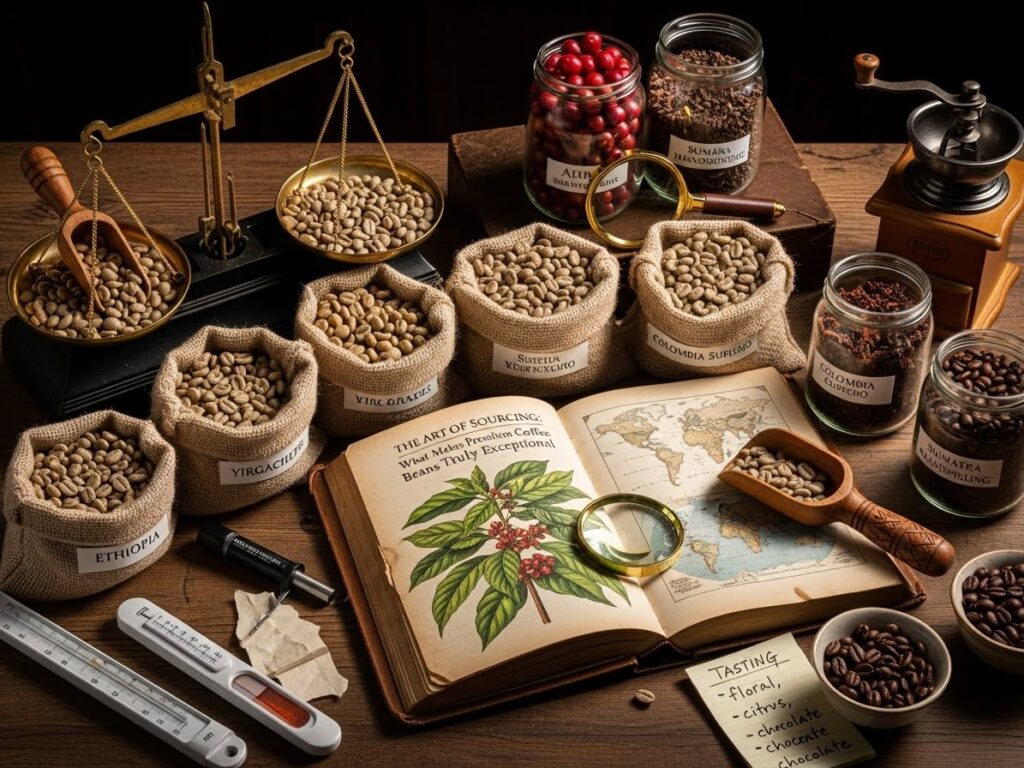
Today, coffee is cultivated in over 70 countries, primarily located in the “Coffee Belt.” This region, located between the Tropics of Cancer and Capricorn, provides the ideal climate for coffee growth. The two most popular species of coffee are Arabica and Robusta.
Arabica beans are known for their sweeter, softer taste, while Robusta beans have a stronger, harsher flavor and higher caffeine content. The harvesting process involves either hand-picking or mechanical stripping. Hand-picking is more selective and allows for ripe cherries to be picked at their best, while mechanical harvesting is faster but less discerning.
Processing the Beans
Once harvested, coffee beans undergo processing to extract the seeds from the cherries. The primary methods are:
- Wet Processing: The cherries are hulled, fermented, and washed, resulting in a cleaner bean.
- Dry Processing: The cherries are spread out in the sun to dry before hulling, imparting a more robust flavor.
Roasting: The Transformation
Roasting is a crucial step in developing the flavor of coffee. Green coffee beans are heated at varying temperatures, causing chemical changes that create the desired flavors and aromas. Roasting profiles can significantly affect the end taste; light roasts maintain more acidity and floral notes, while dark roasts bring out deeper, bolder flavors.
Grinding the Coffee
Next comes grinding, which increases the surface area of the beans, enabling better extraction during brewing. The grind size varies based on the brewing method. For instance, a coarse grind is suitable for French press, while a fine grind is needed for espresso.
Brewing Methods
There are numerous ways to brew coffee, each producing distinct flavors and experiences. Here are some popular methods:
- Drip Coffee Maker: The most common method in households, ideal for brewing multiple cups.
- French Press: A method that allows for full immersion, resulting in a rich and robust flavor.
- Espresso Machine: Forces water through finely-ground coffee, creating a concentrated beverage.
- Aeropress: A portable option that yields strong coffee quickly.
- Chemex: A unique carafe that provides a clean and bright cup of coffee.
Enjoying the Brew
After brewing, the coffee is ready to be enjoyed. Whether you prefer it black or with milk and sugar, the possibilities for customization are immense. Specialty coffee shops often offer various flavors and brewing methods, allowing consumers to explore the vast world of coffee.