Now Reading: 10 Amazon Baking Tools Every Home Baker Needs (Beginner-Friendly)
-
01
10 Amazon Baking Tools Every Home Baker Needs (Beginner-Friendly)


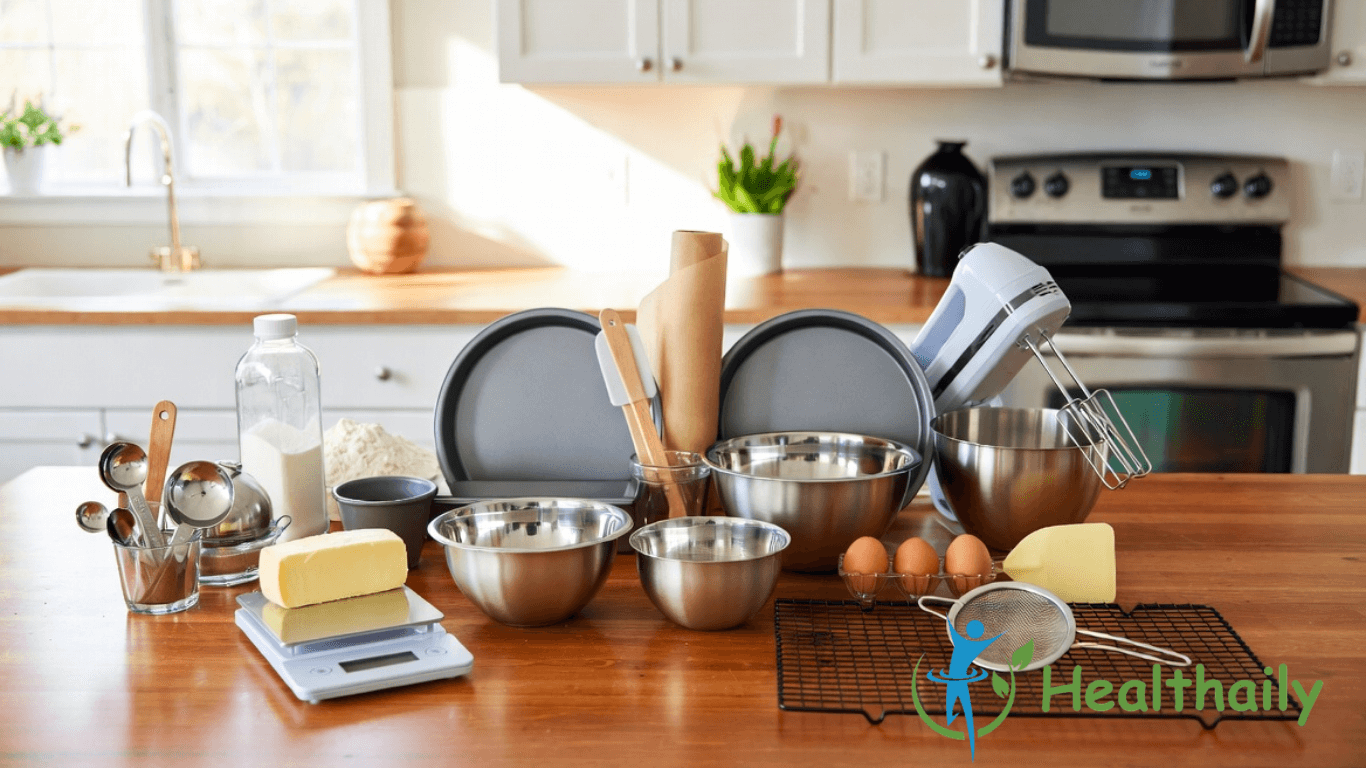

I still remember my first baking attempt. I followed a recipe. I felt confident. The result failed. I did not fail because of skill. I failed because I lacked the right tools. Baking needs accuracy. Baking needs control. Baking also needs the right basics.
I now bake often at home. I keep my setup simple. I rely on tools that save time and prevent mistakes. Many of these tools are easy to find on Amazon. They work well for beginners. They also last for years.
In this article, I share the ten baking tools I believe every home baker needs. I explain what each tool does. I explain why it matters. I explain how it helps beginners succeed.
Measuring Cups and Measuring Spoons
I always start with measuring tools. Baking needs exact amounts. Guessing ruins results. Measuring cups help me stay accurate.
Dry cups measure flour and sugar. Liquid cups measure milk and oil. Measuring spoons handle small amounts like baking powder and salt.
I level dry ingredients with a knife. I fill liquid cups to the marked line. This habit improves texture and taste.
Without these tools, baking becomes guesswork. With them, baking feels controlled and repeatable.
Digital Kitchen Scale
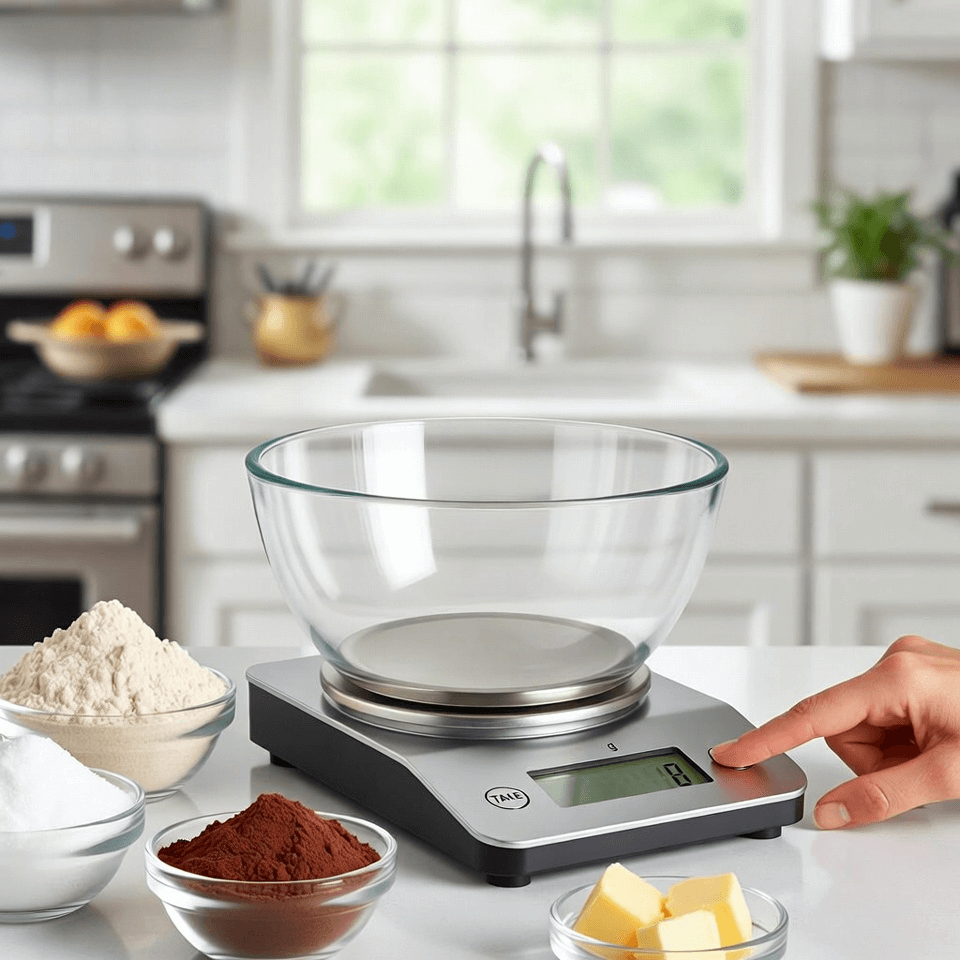
I trust a kitchen scale more than cups. A scale gives exact weight. It removes errors from packing flour too tightly.
I place a bowl on the scale. I press tare. I add ingredients until the number matches the recipe. This method saves time and dishes.
A scale helps beginners follow recipes from any country. Many recipes use grams. A scale makes them easy.
This tool improves results fast. It also builds baking confidence.
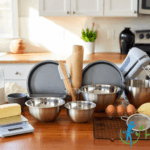
Mixing Bowls (Multiple Sizes)
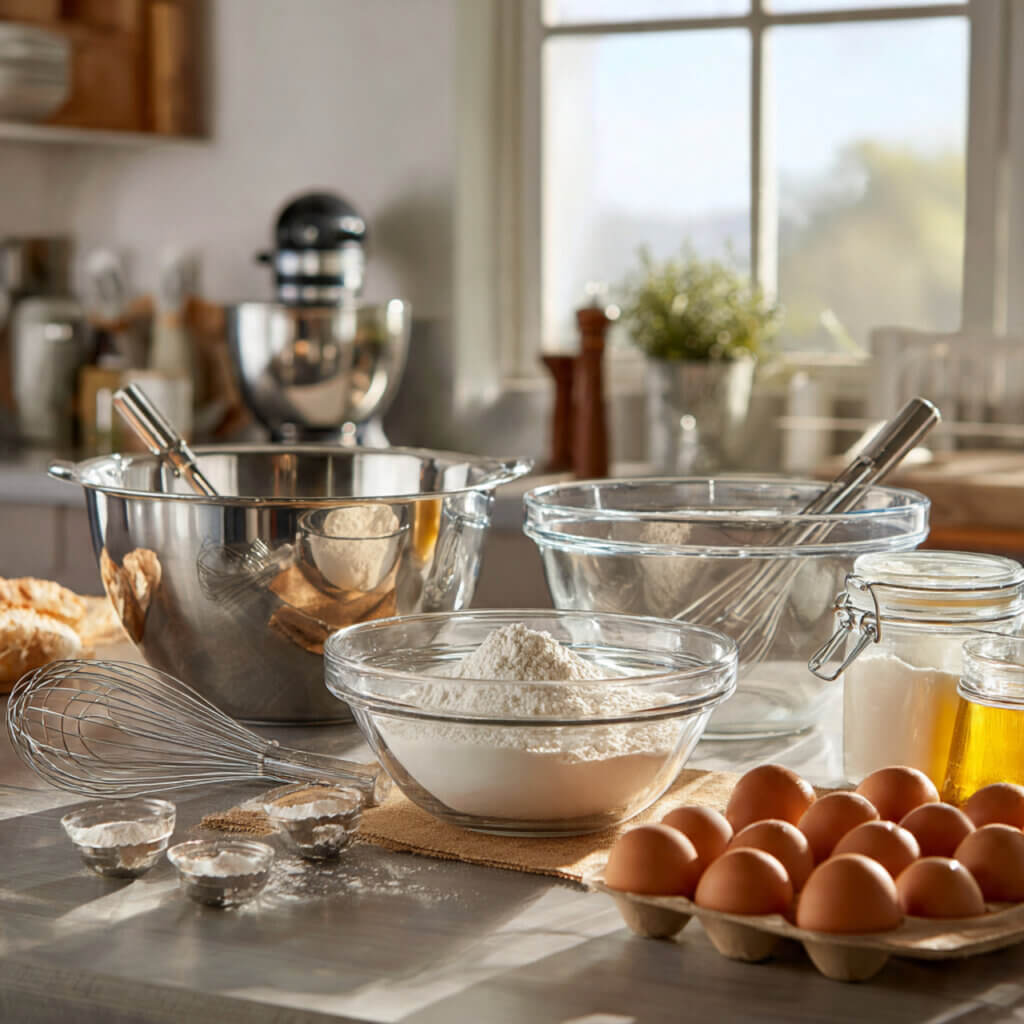
I use mixing bowls every time I bake. I need one for dry ingredients. I need one for wet ingredients. I need one for mixing.
I choose bowls with non-slip bases. They stay steady. I prefer stainless steel or glass. They clean easily.
Different sizes help with different tasks. A small bowl works for eggs. A large bowl works for batter.
Mixing bowls form the base of all baking work.
Silicone Spatula
I use a silicone spatula more than any other tool. It scrapes bowls clean. It folds batter gently.
I use it to mix. I use it to pour. I use it to spread. Silicone does not scratch bowls or pans.
This tool helps beginners avoid waste. It also helps keep air inside batter when folding.
A good spatula makes baking smoother and cleaner.
Hand Mixer or Stand Mixer
I started with a hand mixer. It whipped cream. It mixed cake batter. It saved my arms.
A stand mixer costs more. It mixes evenly. It frees my hands. It handles dough better.
Beginners can start with a hand mixer. It handles most recipes. It stores easily.
Mixers help control texture. They reduce mixing errors. They make baking faster and easier.
Baking Pans (Essential Shapes)
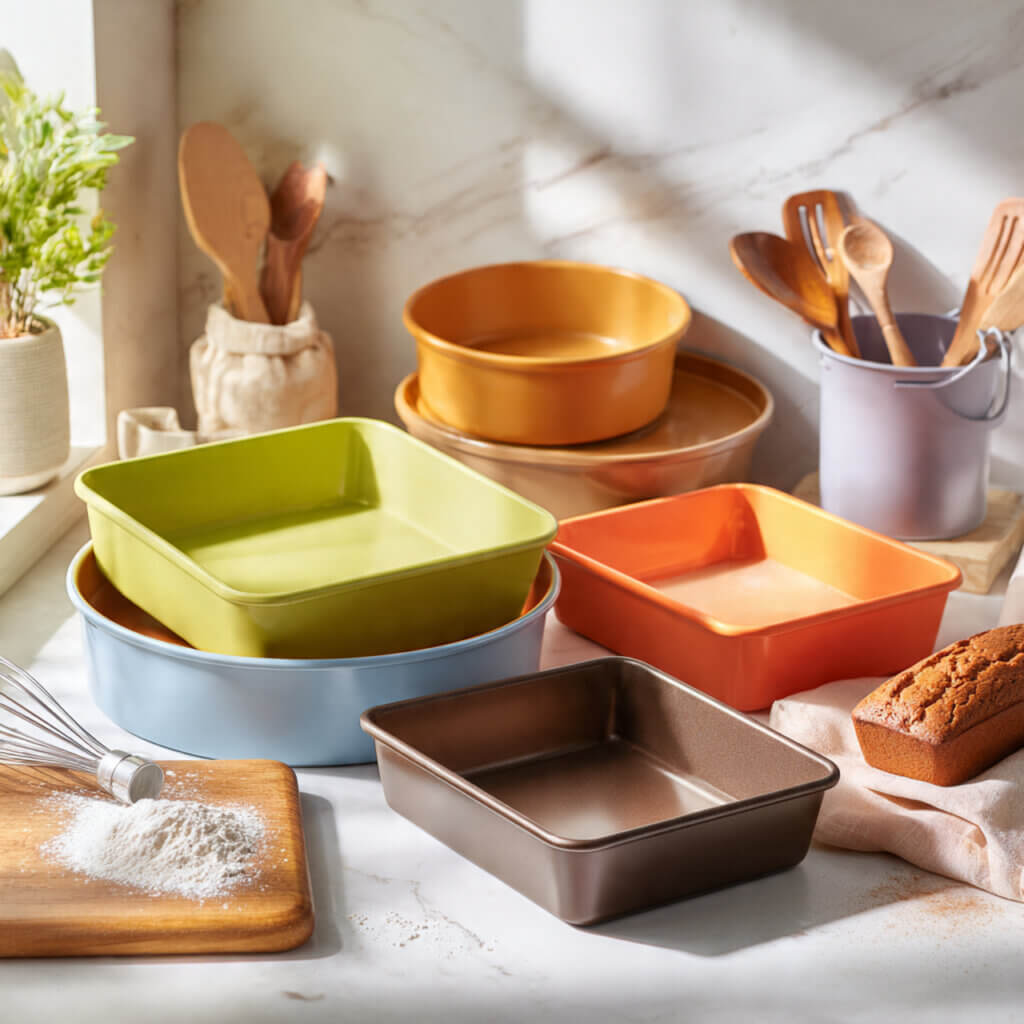
I keep a few basic pans. I use a round pan for cakes. I use a loaf pan for bread. I use a square pan for brownies.
I choose pans with even heat flow. Non-stick pans help release baked goods easily.
I line pans with parchment paper. This step prevents sticking. It also helps with clean removal.
A few good pans cover many recipes. Beginners do not need many shapes.
Parchment Paper
I always keep parchment paper in my kitchen. It saves time. It prevents sticking. It protects pans.
I line cake pans. I line cookie sheets. I wrap dough.
Parchment paper improves results. Cookies bake evenly. Cakes release cleanly.
This tool costs little. It delivers big value. Beginners should never skip it.
Oven Thermometer
I trust my oven less than my thermometer. Many ovens run hot or cold. This problem ruins baking.
I place a thermometer inside the oven. I check the real temperature. I adjust if needed.
This tool helps cakes bake evenly. It helps cookies avoid burning. It helps bread rise correctly.
Beginners benefit greatly from this simple tool.
Cooling Rack
I remove baked goods from pans quickly. I place them on a cooling rack. This step prevents soggy bottoms.
Air flows under the food. Steam escapes. Texture stays right.
I cool cookies. I cool cakes. I cool bread.
A cooling rack protects your hard work. It finishes the bake properly.
Fine Mesh Sieve
I use a sieve to sift flour. I use it to dust powdered sugar. I use it to remove lumps.
Sifting adds air. It improves texture. It helps ingredients mix evenly.
This tool also helps strain liquids or cocoa.
A sieve seems small. Its effect feels big.
Why These Tools Matter for Beginners
Download below infographic for future use
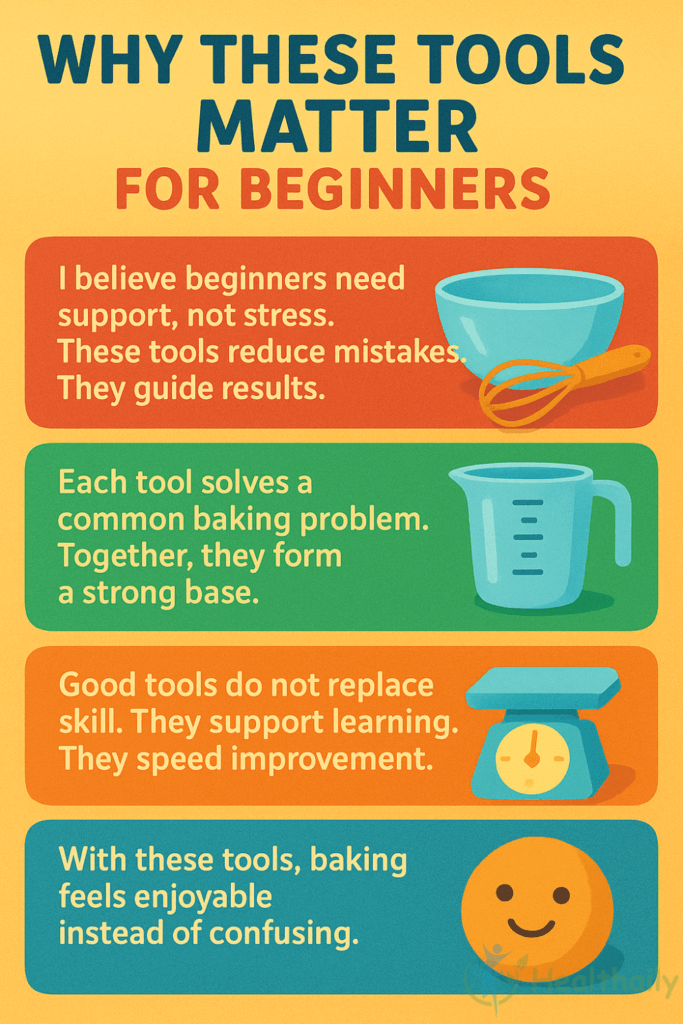
I believe beginners need support, not stress. These tools reduce mistakes. They guide results.
Each tool solves a common baking problem. Together, they form a strong base.
Good tools do not replace skill. They support learning. They speed improvement.
With these tools, baking feels enjoyable instead of confusing.
How I Built My Baking Setup Slowly
I did not buy everything at once. I started with measuring tools. I added a mixer later.
I chose quality over quantity. I read reviews. I picked simple designs.
This slow approach helped me learn each tool well. It also saved money.
Beginners should grow their setup step by step.
Common Baking Mistakes These Tools Prevent
Download below infographic for future use
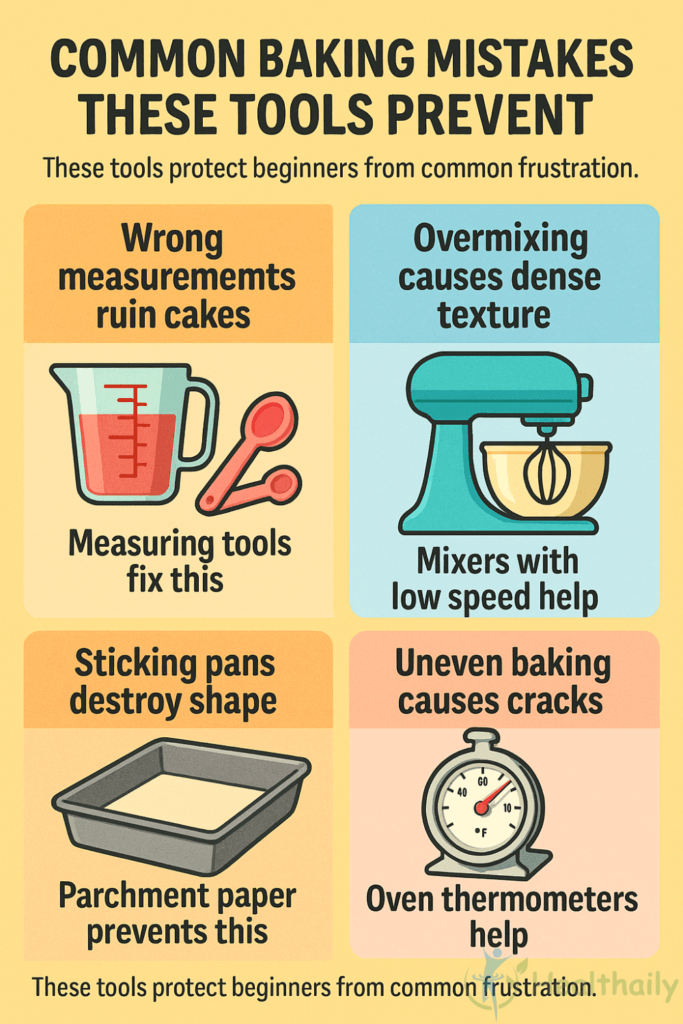
Wrong measurements ruin cakes. Measuring tools fix this.
Overmixing causes dense texture. Mixers with low speed help.
Sticking pans destroy shape. Parchment paper prevents this.
Uneven baking causes cracks. Oven thermometers help.
These tools protect beginners from common frustration.
How to Care for Baking Tools
I wash tools after each use. I dry them fully.
I avoid metal tools on non-stick pans. I store tools neatly.
Good care extends life. It keeps results consistent.
Simple habits protect investment.
Baking Confidence Comes from Preparation
I feel calm when I bake now. I know my tools. I trust my process.
Preparation removes fear. Tools bring control.
Baking becomes creative instead of stressful.
Confidence grows with every successful recipe.
Final Thoughts
I believe baking should feel welcoming. Beginners deserve tools that help, not confuse.
These ten tools support learning. They improve results. They make baking enjoyable.
I use them often. I trust them fully.
If you want to bake at home, start here. Build slowly. Bake often. Enjoy the process.
| Tool Type | Basic Tools (Start With These) | Optional Tools (Add Later) |
|---|---|---|
| Measuring | Measuring cups and spoons | Digital kitchen scale |
| Mixing | Mixing bowls | Stand mixer |
| Hand Tools | Silicone spatula | Dough scraper |
| Electric Tools | Hand mixer | Food processor |
| Bakeware | One cake pan or loaf pan | Multiple specialty pans |
| Lining Tools | Parchment paper | Silicone baking mat |
| Accuracy Tools | — | Oven thermometer |
| Finishing Tools | — | Cooling rack |
| Prep Tools | — | Fine mesh sieve |
Frequently Asked Questions
What baking tools do beginners really need?
I believe beginners need basic tools first. Measuring cups, measuring spoons, mixing bowls, and a spatula matter most. These tools control accuracy and mixing. Without them, baking feels random.
Do I need a stand mixer to start baking?
I do not think beginners need a stand mixer. A hand mixer works well for cakes, cookies, and cream. I used a hand mixer for years. It handled most recipes easily.
Is a kitchen scale better than measuring cups?
I find a kitchen scale more accurate than cups. A scale measures exact weight. Cups change based on how tightly I pack ingredients. I use both, but I trust the scale more.
What baking pan should I buy first?
I suggest starting with one round cake pan or one square pan. These pans work for many recipes. I baked cakes, brownies, and bars with just one pan at first.
Why does my cake stick to the pan?
I know this problem well. Cakes stick because of poor greasing or low-quality pans. I fix this by using parchment paper. This step helps the cake release cleanly every time.
Why do my cookies burn on the bottom?
I learned that ovens often run hot. I use an oven thermometer to check heat. I also place parchment paper on the tray. These steps prevent burning.
Can I bake without parchment paper?
Yes, I can bake without it. I grease pans well when I skip it. Still, parchment paper saves time and stress. I prefer to use it every time.
How do I know when baked goods are fully done?
I use simple checks. I insert a toothpick into cakes. It should come out clean. Cookies should set at the edges. Bread should sound hollow when tapped.
How important is sifting flour?
I find sifting helpful for light texture. It removes lumps. It adds air. I always sift flour for cakes. For cookies, I sift when the flour looks packed.
Can I use regular bowls instead of mixing bowls?
I can use regular bowls. Still, mixing bowls help more. They stay stable. They hold larger amounts. They make mixing easier and cleaner.
How long do baking tools last?
I see good tools last many years. I care for them well. I wash them gently. I store them safely. Quality tools save money over time.
Do expensive baking tools bake better?
I do not think price alone matters. Simple tools work well. I focus on function and build quality. Many affordable tools perform perfectly for home baking.
Comparison Table: Basic vs Optional Baking Tools
This table helps beginners decide what to buy first and what to add later.